





Major record labels are currently at war with artificial intelligence platforms. They are suing platforms like Suno and Udio for copying millions of protected songs without permission. A few years ago, Ed Sheeran had to take the stand with his guitar. He successfully fought off a massive legal claim over his hit song “Thinking Out Loud“.
Those headline-grabbing court battles involve massive corporations with endless money. The major labels can afford to fight in federal court for years. However, the legal battlefield is entirely different for independent artists and small studio owners. A single legal claim can completely destroy a rising independent musician.

The financial stakes have never been higher for creators. AI companies are now valued at billions of dollars. Independent musicians must learn the rules of this new game to survive.
This article will show you how to protect your creative business in the modern music industry. We will look at the real costs of legal battles and the best ways to insure your career. You will also learn exactly how to secure your digital files before they leak.
The Financial Reality of a Copyright Lawsuit
People often think proving a stolen song is a mysterious process. In reality, the law looks at two main things. First, did the accused person have access to the original song? Second, are the two songs substantially similar to the average listener?
Music rights are split into two distinct halves. You have the master recording, which is the actual audio file you hear. Then you have the publishing rights, which cover the written lyrics and melody. If someone copies your melody but sings it themselves, they are stealing your publishing rights.
When an artist gets hit with a music copyright infringement lawsuit, the panic sets in quickly. They immediately realize they need professional legal help. Hiring a good intellectual property attorney is not cheap. Most lawyers will not even look at your case without a large upfront payment.
This payment is called an entertainment lawyer retainer. It often ranges from $10,000 to $50,000 just to start the defense process. Most independent artists simply do not have that kind of cash sitting in a bank account. They often have to launch crowdfunding campaigns just to pay their legal bills.
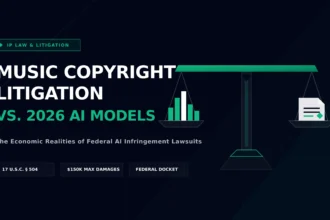
If you lose the case, the financial punishment can be massive. The court can order you to pay statutory copyright damages. These are preset penalty amounts written into law. They can reach up to $150,000 for a single intentional violation.
Because the financial risk is so high, many accused creators just surrender. They settle out of court and give away a large percentage of their songwriting credits. They do this even when they believe they did not steal anything. The cost of proving their innocence is simply too high for a normal person to afford.
Many people do not realize how easy it is to accidentally copy a song. There are only so many chord progressions in pop music. This makes accidental copying a very real threat for any working songwriter.
The defense process drags on for months or even years. The emotional toll of a lawsuit can ruin an artist’s mental health. Many musicians stop writing new music entirely while they wait for a trial to end.
How Modern Artists Insure Their Careers
Artists must start treating their music like a real commercial business. Every smart business owner carries insurance to protect against disasters. Musicians need to adopt this exact same mindset. It is the only way to survive in a litigious industry.
The most basic protection is musician liability insurance. This policy covers you if someone trips over your guitar cable at a live show and breaks their arm. It also protects you if you accidentally damage a venue’s expensive sound system. Without this, one clumsy moment on stage could bankrupt you.
Insurance is not just for huge pop stars playing stadium tours. It is for the bedroom producer sending beats to local rappers. A single bad contract can ruin your life if you are unprotected.
But what happens if a producer claims you used their unreleased beat without paying? This is where errors and omissions insurance for creators comes in. This special policy protects you if you accidentally fail to clear a sample. It also covers claims of accidental copyright infringement if two songs sound surprisingly similar.
For serious producers and record labels, there is an even higher level of protection. You can purchase intellectual property defense insurance. If someone sues you for stealing their melody, this insurance pays your legal bills. It covers your attorney fees so you can actually fight back in court instead of backing down.
Physical protection is just as important as legal protection. A flooded basement or a break-in can wipe out your entire studio overnight. You should always get a customized music equipment insurance quote. Standard renter’s insurance will not cover $20,000 worth of stolen studio microphones if you use them for business.
When you look for policies, talk to a specialized broker. A general insurance agent might not understand the difference between a synthesizer and a sampler. You need someone who speaks the language of the music industry.

Protecting Digital Stems, Audio Files, and Assets
In the streaming era, your digital audio files are your most valuable physical assets. A “stem” is an individual audio track, like an isolated vocal or a drum loop. If your stems leak online before your release date, you lose complete control of your project. Hackers will upload your unfinished songs and ruin your marketing plan.
Many producers still store their entire life’s work on a single external hard drive. This is a massive mistake. Hard drives crash, get lost at airports, and get stolen from backpacks. You must set up an enterprise cloud backup for audio files.
Enterprise-grade backups work automatically in the background without you thinking about it. They ensure that every time you save a Pro Tools or Logic session, it uploads to a remote server. This leads us to the importance of secure cloud storage for studios. You need a system that requires two-factor authentication before anyone can download your tracks.
Cloud storage is completely useless if you do not organize it properly. Think of your hard drive like a professional filing cabinet. Do not just throw audio files into a random folder labeled “New Song.”
Managing all these files requires a tight organizational system. Proper digital asset management for creators means labeling every single file clearly. You need to know exactly who played guitar on a track and what day they recorded it. If a legal dispute happens five years later, those labeled files become your strongest evidence.
Finally, studios must take hacking threats seriously. Cybersecurity for music studios is no longer just for massive corporate labels. Hackers often target independent producers looking for unreleased tracks from famous featured artists. You must use strong passwords, update your software, and never share private links on public forums.
Your passwords are the keys to your financial future. Use a dedicated password manager to create complex codes for your studio accounts. A weak password on your email can give hackers access to your entire catalog.
A 3-Step Checklist to Protect Your Music Legally
Protecting your music is not just about playing defense. You must take active steps to claim your ownership before a problem ever starts. A good offense is the best defense in the music industry. Follow this three-step checklist to lock down your rights.
1. Master Your Publishing and Registrations
Writing a great song is only half the battle. You must register that song with a Performing Rights Organization (PRO) like BMI or ASCAP. They track your music and collect money when your song plays on the radio or in a restaurant.
You also need to set up proper music publishing administration. A publishing administrator makes sure you collect all global royalties from Spotify, Apple Music, and YouTube. Without an administrator, you are likely leaving thousands of dollars unclaimed in foreign countries.
You should audit your registrations every single year. Make sure your PRO account has your current mailing address and direct deposit info. Old contact information is the main reason artists miss out on royalty checks.
2. Register Your Copyrights and Brands
Do not rely on a “poor man’s copyright” like mailing a CD to yourself. The courts do not recognize this old trick anymore. You must officially register your songs with the government copyright office. This official registration is the only way you can sue someone in federal court.
Do not wait until you have a hit song to file your paperwork. The copyright office can take months to process your application. You want that legal shield in place before your song goes viral on social media.
Your band name and logo are also highly valuable properties. You should file a trademark registration for music brands. This prevents another band across the country from using your name and stealing your hard-earned fans.
3. Organize Your Money
The music industry is a truly global business today. You will eventually earn money from fans in Europe, Asia, and South America. You need a safe and fast way to receive that money.
Set up a reliable system for an international wire transfer for royalties. This ensures you get paid quickly without losing massive amounts of money to hidden currency exchange fees. Keep your music income in a completely separate bank account from your personal grocery money.
Conclusion
The music business is changing faster than ever before. Artificial intelligence platforms are creating brand new legal headaches every single day. Multi-billion dollar lawsuits will continue to make headlines across the world.
You cannot control what the major labels do in court. However, you can entirely control how you protect your own art. By setting up the right insurance, securing your files, and registering your rights, you build a fortress around your career.
Do not let the fear of lawsuits stop you from making music. Legal knowledge should empower you, not freeze you in place. Once your business is protected, you can create with total freedom.
Treat your music like the serious business it is. Protect your assets today so you can focus on creating great art tomorrow.