





Afrobeats, K-Pop, and Latin Pop are completely taking over the global charts. A teenager making beats in a bedroom in London, Manila, or Bogotá can go viral on TikTok in just a few hours.
Suddenly, millions of people in London and New York are dancing to their track. The streaming numbers look amazing on a computer screen.
But those massive numbers mean absolutely nothing if the artist cannot actually withdraw the cash back home. This is the dark side of going viral.
Getting millions of streams and actually getting paid are two completely different games in the music business. Many indie acts see big numbers online but have empty pockets in real life.
The money simply gets stuck in a broken system. Old banking rules and confusing music laws keep creators from their rightful earnings.
Recommended: The Real Cost of Building a Multi-Platinum Home Studio (And How Indie Artists Finance It)
This guide breaks down exactly how to fix that problem. We will cover how to track down your hidden royalties and set up global banking to bring your earnings home safely.
A million streams sounds like a lot, but what does it actually look like in your bank account? Use our royalty calculator below to see the shocking difference in how much Spotify pays compared to Apple Music.
Royalty Calculator
Estimate net earnings based on audience region and distributor splits.
The Two Halves of a Song: Master vs. Publishing
To understand how the music industry pays, you need to know a basic rule. Every single song is actually two separate pieces of property.
There are two main types of royalties your song earns:
- Master Royalties: Paid to the person who owns the actual sound recording.
- Publishing Royalties: Paid to the people who wrote the lyrics and created the beat.
The master is the exact audio file you hear when you press play on Spotify, Apple Music, or YouTube. When an artist uploads a track through a distributor like DistroKid or TuneCore, they collect money for the master.
Second, there is the publishing side of the song. Whenever someone streams your track, plays it on the radio, or spins it in an overseas club, it generates publishing money.
You do not collect this money from your normal distributor. You need proper performance rights organization registration to claim those specific performance funds.
Groups like ASCAP, BMI, or PRS track radio and live plays to pay the writers directly. But performance money is only one piece of the publishing puzzle.
There are also mechanical royalties. Mechanical royalties are generated every single time a song is streamed on Spotify or purchased on iTunes.
Every stream pays the master owner, but it also owes a tiny fraction of a penny to the songwriter. For an independent act living outside the US or Europe, tracking down all these different micro-pennies is almost impossible.
The money sits in hundreds of different global societies. That is why setting up proper music publishing administration is a massive game-changer for indie acts.
Companies like Songtrust or Sentric step in to act as your global collectors. They register your songs with hundreds of pay sources worldwide.
They hunt down every single penny your lyrics and beats earn across the globe. Then, they gather it all into one central account for you.
The Danger of the Black Box
When you do not register your music properly, your money does not just disappear. It goes into something the industry calls the “black box.”
The black box is a giant pool of unclaimed royalty money. This happens when streaming services know a song was played, but they do not know who wrote the lyrics.
Every year, hundreds of millions of dollars end up in this exact situation. The streaming platforms hold onto the cash for a specific period of time.
After a few years, they empty the black box. But they do not give the money to charity.
They pay it out to major publishers based on their market share. This means your unclaimed money might literally be paying a massive pop star instead of you.
As an indie artist, you have to fight for your share. You cannot assume the platforms will automatically find you and hand you a check.
Handling Splits with Global Collaborators
Making music today is a deeply global process. You might find a beat on YouTube made by a producer in France.
You might get a vocal feature from a singer in South Africa. When the song comes out, all three of you need to get paid fairly.
This creates a massive headache when it comes to splitting the cash. Before the song even drops, you need a written agreement called a split sheet.
A split sheet simply states exactly what percentage of the song everyone owns. If you do not have this in writing, the streaming platforms can freeze your money entirely.
Once the song generates income, the person who uploaded it usually gets the master royalties first. Now, they are responsible for paying the other collaborators.
If you live in different countries, this step used to be a total nightmare. Sending a standard bank transfer to a foreign country takes days and costs a fortune in fees.
This leads directly back to why modern banking tools are so essential. You need a system that lets you pay your team without losing your profits to the bank.
The Global Banking Problem: Getting Your Cash Across Borders
Let’s say your song is a massive hit and the royalties finally start rolling in. Now you face the biggest hurdle of all.
How do you actually get the money into your hands? Spotify, Apple Music, and major distributors often refuse to send money directly to local banks in Africa, Asia, or South America.
Their outdated systems are simply not built for it. If they do agree to send a wire transfer, the process is brutal.
Local banks often hit creators with terrible exchange rates and massive hidden fees. You could lose a huge chunk of your earnings just moving the money across a border.
Plus, in many countries, local currencies lose value fast due to high inflation. The secret fix is opening a virtual US bank account for non-residents.
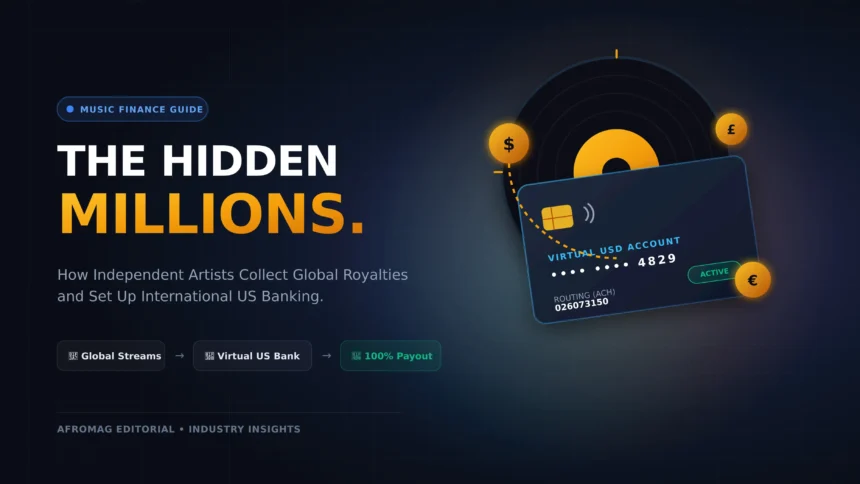
Services like Wise, Payoneer, or Mercury allow you to hold US dollars legally without ever stepping foot in America. This setup acts as a financial bridge.
The music platforms pay your virtual US account directly, treating it just like a local New York bank. Your distributor sees a standard US routing number.
Because of this, the payment goes through instantly without extra international wire fees. Once the money lands in your virtual account, you are completely in control.
You decide exactly when and how to convert it into your local currency. You can wait for a day when the exchange rate is strong, protecting your hard-earned cash.
For artists who manage a team, buy beats online, or pay international managers, upgrading to an international business bank account for creators makes life even easier. These modern banking platforms allow you to issue debit cards to your team.
You can pay international bills directly from your royalty funds without converting currencies twice. They process cross-border royalty payments quickly and cheaply.
Using a modern financial platform gives you three major benefits:
- Zero Wire Fees: Receive direct deposits from US companies for free.
- Currency Control: Hold your money in USD to protect against local inflation.
- Easy Payouts: Pay your global team with internal transfers or debit cards.
You keep the money you earned instead of handing it over to old-school banks. You can finally operate like a global business, no matter where you sleep at night.
How to Set Up Your Virtual US Account in 4 Steps
Getting paid for your global streams does not have to be complicated. By setting up a virtual US bank account, you can receive your music royalties directly via US Direct Deposit (ACH) and avoid massive international wire fees. Here is exactly how to do it.
Select a Fintech Platform
Choose a provider that fits your location and business size. Wise is highly recommended for individual freelancers. Payoneer is widely supported by platforms like DistroKid, while Mercury is the best choice if you have a registered US LLC.
Complete Identity Verification (KYC)
Sign up using your exact legal name and residential address. To pass verification, you will need to upload a valid government-issued ID (like an international passport or national ID) alongside a recent proof of address (such as a utility bill or bank statement).
Obtain US Routing and Account Numbers
Once your identity is verified, simply open a “USD Balance” inside the app. The fintech platform will instantly generate a unique US routing number and a US account number officially registered in your name.
Link to Your Music Distributor
Log into your primary distributor (like DistroKid, TuneCore, or CD Baby) or your publishing admin (like Songtrust). Navigate to the Payout Details section, select ACH / Direct Deposit (US), and paste your new virtual account details.
Protecting and Growing the Money: Do Not Go Broke
Seeing a giant royalty deposit hit your account feels amazing. It is solid proof that your art has real financial value.
But independent artists often make a fatal mistake right here. They spend all the money at once to celebrate.
Taxes apply to music income just like they apply to a normal day job. If you ignore the tax man, you risk facing a massive, expensive audit down the road.
Smart artists treat their music like a real company from day one. They do not mix their grocery money with their music money.
They track every single studio session, flight ticket, and camera purchase as a business expense. These expenses are called “write-offs,” and they lower the amount of taxes you owe.
Using freelance tax software for musicians makes this completely simple. You connect your bank account, and the software categorizes your spending automatically.
It tracks your write-offs so you only pay taxes on your actual profit, not your gross income. If you spent $5,000 on a music video, you should not pay taxes on that specific money.
Once you set aside money for taxes, do not just leave your leftover cash sitting in a checking account doing nothing. Checking accounts rarely pay you any interest.
Move your extra profits into a high-yield business savings account. This simple move allows your money to grow passively between your album releases.
Earning a strong percentage of interest on a big royalty check can literally pay for your next PR campaign. You earn this extra money without lifting a single finger.
Your money should work just as hard as you do in the studio. Building wealth in music is about keeping the money you make, not just making it once.
Conclusion: Structure Beats Luck
The modern music industry can easily feel like a giant maze. It often seems built to keep independent acts confused, frustrated, and broke.
But with the right knowledge, you can bypass the old gatekeepers completely. You no longer need a major label to collect your global cash or manage your business.
Talent is what gets you streams. A catchy hook is what gets you on playlists.
But your business structure is what actually gets you paid. Get your accounts in order, track down your publishing, and manage your taxes like a pro.
Set up your international banking so you never lose out on exchange rates again. It is time to stop leaving money on the table and start claiming the global earnings you rightfully deserve.